Safiqur Rahman, Nagaon:
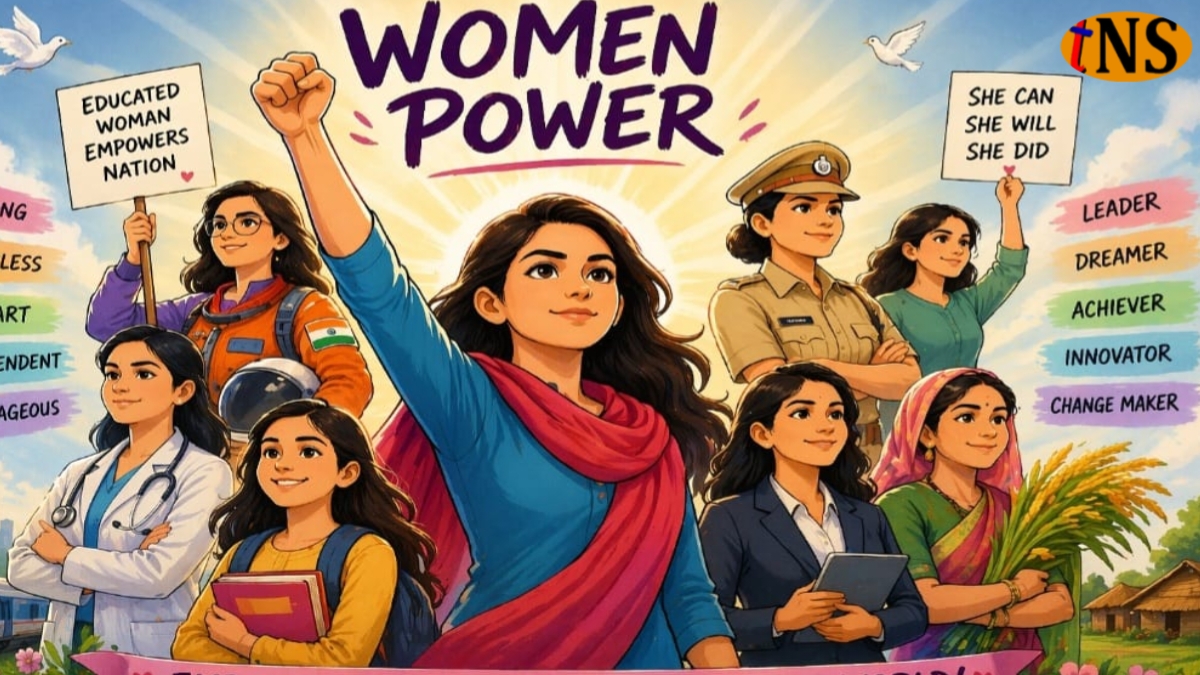
The passage of the Women’s Reservation Bill, 2023—officially known as the Nari Shakti Vandan Act—stands as one of the most significant legislative milestones in recent Indian political history. For decades, the demand for greater representation of women in legislative bodies remained a pending reform. With this law, India has formally committed to reserving 33% of seats for women in the Lok Sabha and State Legislative Assemblies, marking a decisive step toward gender-inclusive governance (Women’s Reservation in India).
At present, women’s representation in India’s Parliament remains relatively low compared to global standards. While there has been gradual improvement over the years, it still falls short of reflecting the demographic and social realities of the country. The new law, therefore, seeks to correct this imbalance by structurally ensuring that women have a stronger and more consistent presence in law-making institutions.
However, the implementation of this reform is not immediate. The Act clearly links its execution to the next delimitation exercise, which will be carried out after the first Census conducted following the law’s passage. This effectively pushes the timeline to around 2034, making the reform both forward-looking and conditional.
It is this linkage with delimitation that has triggered a fresh wave of political debate. Delimitation, by definition, involves redrawing the boundaries of parliamentary and assembly constituencies based on population changes. If carried out strictly on population data, it could significantly alter the balance of political power among India’s states.
States with higher population growth—primarily in the Hindi-speaking belt—are likely to gain more seats in Parliament. On the other hand, states that have achieved better population control, particularly in southern India, along with regions like Assam and the broader Northeast, may experience a relative decline in their share of representation. Similarly, states such as Odisha and Punjab could also face a reduction in proportional influence.
This raises a fundamental question: should political representation be determined purely by population, or should it also account for regional balance and federal fairness? Critics argue that a purely population-based approach may unintentionally penalize states that have performed better in governance indicators such as family planning, education, and healthcare.
Another important dimension of the debate is the political narrative surrounding the issue. While the ruling party has projected the reform as a landmark step for women’s empowerment, it has also accused opposition parties of obstructing progress. However, this claim does not fully align with the legislative record. The Women’s Reservation Bill was passed with broad support across party lines, including from the opposition, reflecting a rare moment of political consensus.
The current disagreement, therefore, is not about the principle of women’s reservation but about the broader implications of its implementation framework. Opposition parties have expressed concerns that linking reservation with delimitation, without adequate safeguards, could disrupt the delicate balance of India’s federal structure.
From a governance perspective, both objectives—enhancing women’s representation and maintaining equitable regional distribution of power—are legitimate and necessary. The challenge lies in ensuring that one reform does not undermine the other. Policymakers must carefully design the delimitation process in a way that upholds constitutional values while advancing gender justice.
The Women’s Reservation Act represents progress, but its true impact will depend on how it is implemented. Beyond legislation, there is also a need to strengthen political participation at the grassroots level, encourage women’s leadership within parties, and address socio-economic barriers that limit their entry into politics.
In conclusion, the debate over women’s reservation and delimitation is not merely a political contest—it is a test of India’s democratic maturity. The goal should not be to claim credit or assign blame, but to ensure that reform is both inclusive and balanced. If approached with care and consensus, this moment can redefine representation in India for generations to come.
The Hidden Agrarian Festival of Assam’s Thengal Kachari Community