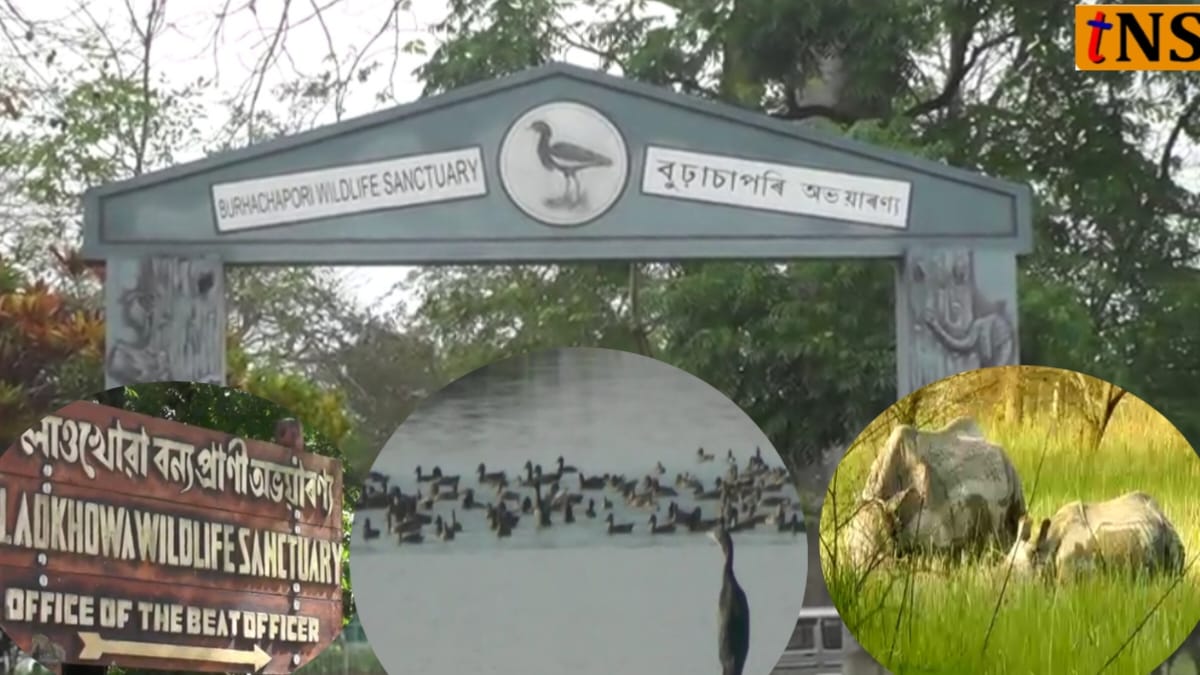
Nagaon: Today is World Wildlife Day. On this occasion, we have attempted to share many lesser-known facts about two important wildlife sanctuaries of the state. These two sanctuaries, which were once world-famous, were on the brink of destruction — yet they have once again become safe havens for wildlife (Laokhowa Burhachapori Wildlife Sanctuaries).
The two sanctuaries are Laokhowa and Burhachapori Wildlife Sanctuaries, located in Nagaon and Sonitpur districts respectively.
History of Laokhowa and Burhachapori
Laokhowa Wildlife Sanctuary received its status as a reserved forest around the same time as Kaziranga National Park, which later gained UNESCO World Heritage recognition. Subsequently, Burhachapori also received recognition as a reserved forest and later as a wildlife sanctuary.
Covering an area of 70.01 square kilometres, Laokhowa, and 44.06 square kilometres, Burhachapori, were once world-famous for the one-horned rhinoceros. According to records, in 1904, while Kaziranga National Park had only 5 rhinoceroses, the Gorajan area of Laokhowa alone was home to 25 one-horned rhinos.
However, while Kaziranga rose to global prominence over time, Laokhowa and Burhachapori gradually fell into decline. These two sanctuaries, world-famous for the one-horned rhinoceros, became completely rhino-free in the 1990s due to rampant poaching. Not only were they stripped of rhinos — rampant poaching, illegal encroachment, and timber smuggling nearly destroyed both sanctuaries entirely. Encroachers occupied thousands of bighas of land, and illegal timber traders felled and stripped the sanctuaries of their precious trees.
Revival Efforts
In the subsequent period, from 2014–15, the then-Congress government’s Forest Minister Rockybul Hussain made some efforts to revive the two sanctuaries, though these were not successful. An expensive project called “Rhino Vision 2020” was launched, and two rhinos were translocated from Kaziranga National Park to Burhachapori Sanctuary in early 2016 — but unfortunately, both rhinos died. Shortly after, one rhino naturally found its way to the sanctuaries, but that rhino too fell to poachers during the first term of the BJP government.
Subsequently, during the BJP government’s first term, steps were taken to evict illegal encroachments:
2016 – 25 residential structures and 15 hectares of land cleared of encroachment
2017 – 80 hectares of land cleared
2020 – 50 hectares of land cleared
However, it was after Chief Minister Dr. Himanta Biswa Sarma’s government came to power that a massive eviction drive began in both sanctuaries. From 2021 to 2024, more than 6,000 bighas of encroached land were cleared — and it is after this that both sanctuaries appear to have truly regained their lost glory.
Return of Wildlife
As encroached land was freed, Assam’s pride — the one-horned rhinoceros — began returning to the sanctuaries naturally. The free movement of one-horned rhinos has brought new life to both sanctuaries. Alongside this, security arrangements in both sanctuaries have been significantly tightened.
Wildlife Currently Found in the Sanctuaries
According to departmental sources, the following wildlife are currently present in Laokhowa and Burhachapori sanctuaries:
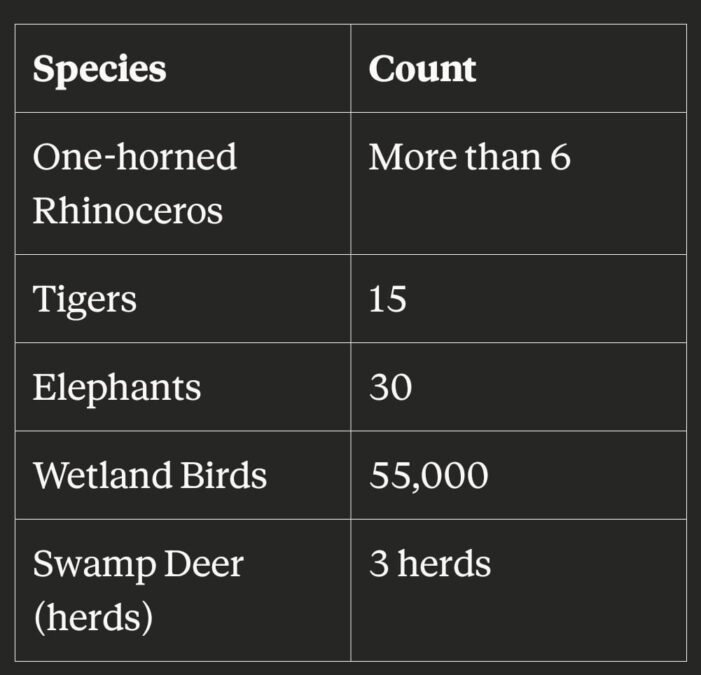
In addition, wild boar, deer, pythons, and numerous other wildlife species now freely roam these sanctuaries, which have truly become thriving protected habitats once more.
Batadrava Doul Yatra Begins with Devotional Grandeur; Over 10 Lakh Devotees Expected