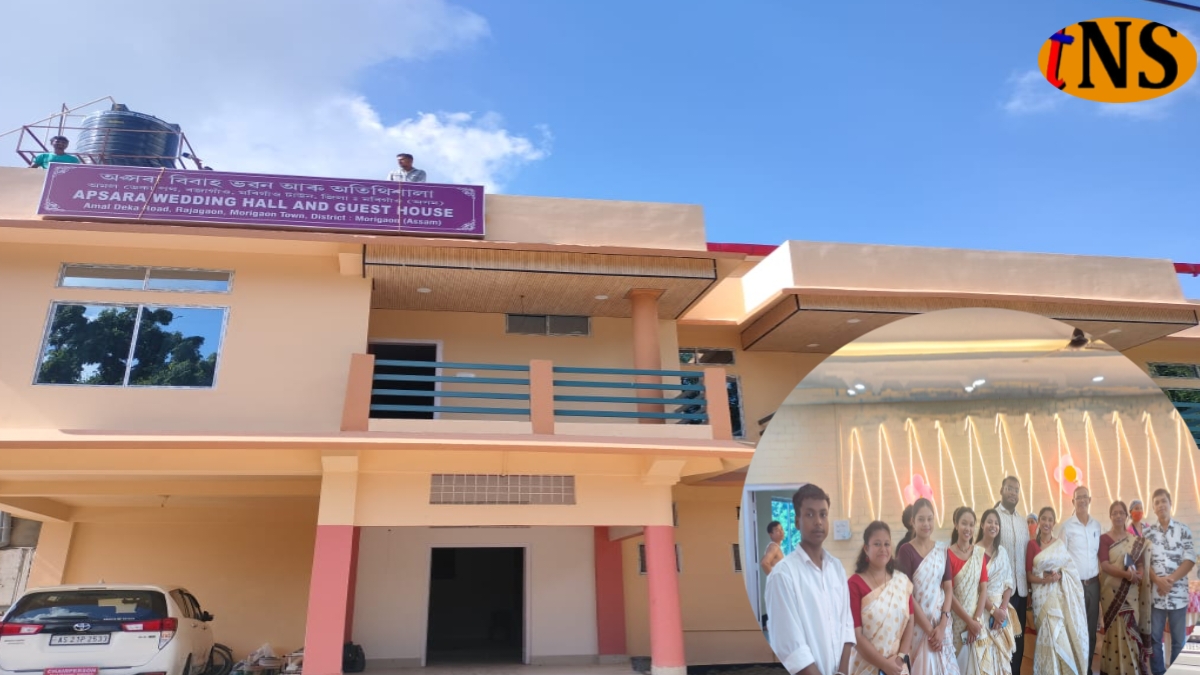
Morigaon: Effective utilization of public assets is a cornerstone of sustainable development and prudent financial management (Apsara Wedding Hall and Guest House). A notable example of this approach is the successful transformation of an abandoned government building in Morigaon town into the “Apsara Wedding Hall and Guest House.”
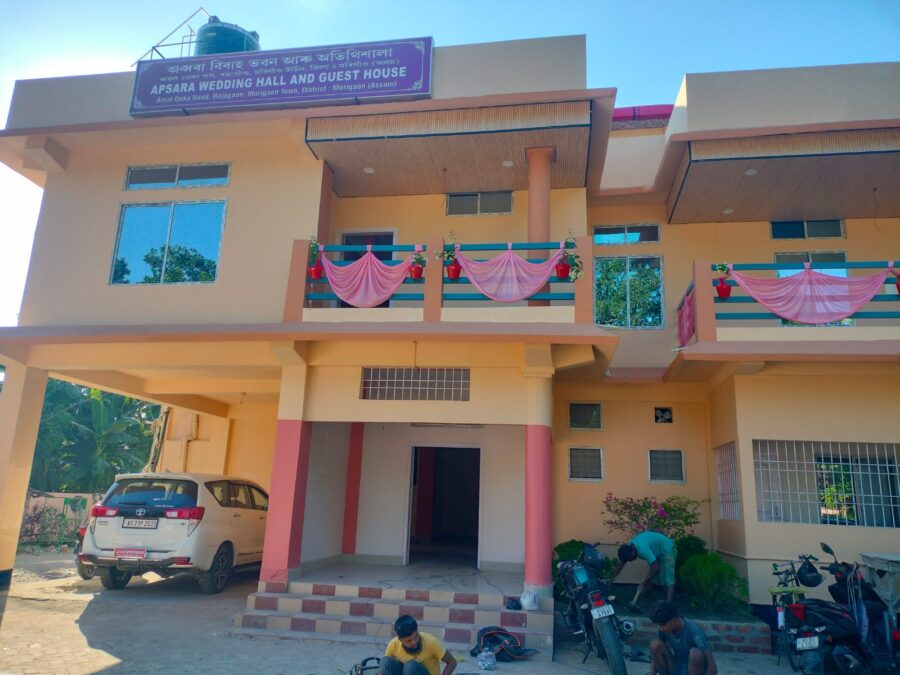
The building was originally constructed around ten years ago at a cost of 75 lakh as a single-storeyed structure comprising four rooms on the ground floor. However, due to the lack of long-term vision in the original initiative, along with the absence of essential infrastructural facilities such as running water, electricity connection, and furniture, the building remained unused for several years and gradually turned into an abandoned public asset.
Recognizing its untapped potential, a renewed and forward-looking initiative was undertaken in April 2025 to redevelop the structure into a modern wedding hall and guest house. The project commenced with an initial investment of 25 lakh. Subsequently, the scope of work was expanded, converting the building from a single-storeyed to a three-storeyed structure. To complete the project, an additional ₹36 lakh was sanctioned from the own source revenue head of the Zilla Parishad.
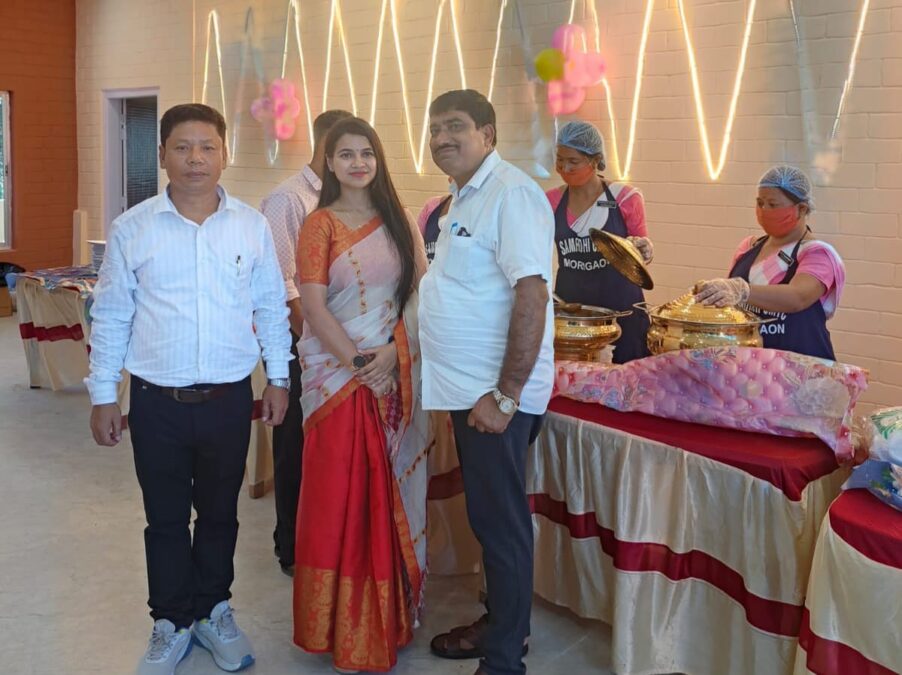
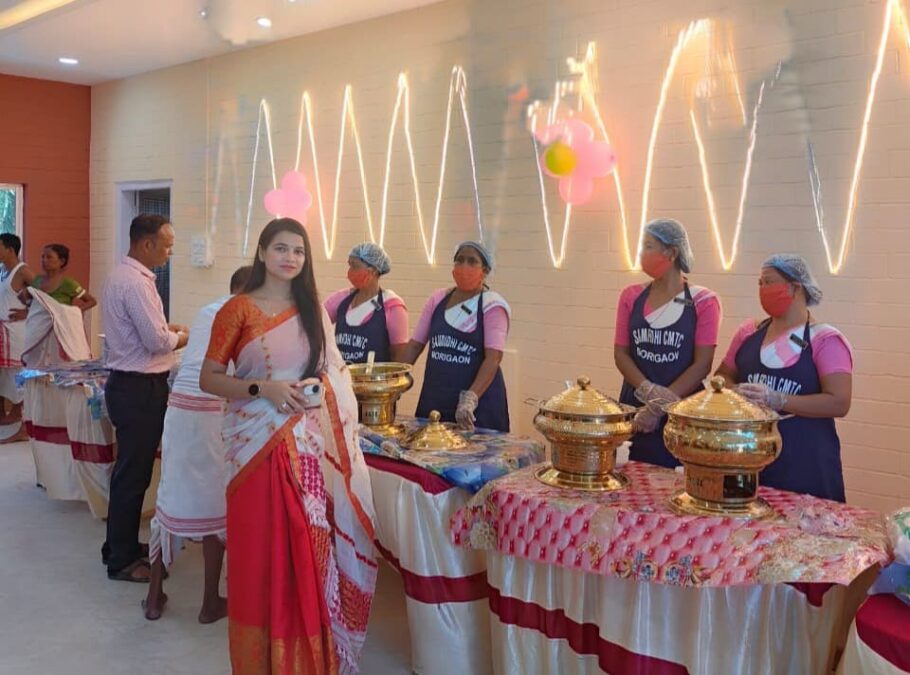
The redeveloped facility has been carefully planned. The first floor has been designed as a guest sitting area with provision for three rooms — one reserved as a rest and make-up room for the bride, one for VIP guests, and another as a rest room for elderly persons and members of the host family. The second floor accommodates a modern kitchen, store room, spacious dining hall, washrooms, and an open-sky dining area, adding both functionality and aesthetic appeal. In addition, the complex includes seven rooms, including two suite rooms, to function as a guest house.
The construction work was completed in October 2025, and the facility was named “Apsara Wedding Hall and Guest House.” It was inaugurated on 22nd October 2025 by the then Hon’ble Water Resource Minister, Sri Pijush Hazarika marking the successful revival of a long-neglected public asset.
Alongside infrastructure development, environmental sustainability was also given priority. Trees were planted across the campus to create a green and eco-friendly environment, while a flower garden was developed to enhance the beauty and ambience of the premises.
In keeping with social inclusion objectives, provision has also been made to allot the wedding hall for five days every month to brides belonging to the Below Poverty Line category.
From the perspective of financial sustainability, the wedding hall portion has been leased out recently for five years at an annual lease value of ₹10.50 lakh, while the guest house component is expected to generate additional recurring income. With modern amenities, open-sky dining, landscaped surroundings, and spacious parking facilities, the complex may be regarded as a luxurious, five-star-level wedding hall and guest house.
It is worth mentioning here that Sri Debasish Sarma, the then District Commissioner, Morigaon was the architect of the idea to transform the building into a wedding hall where people belonging to Below Poverty Line families could avail themselves of its benefits. The responsibility of turning this vision into reality was entrusted to Sri Ananta Kr Gogoi, CEO, Morigaon Zilla Parishad.
When contacted, Sri Hitesh Deka, Assistant Engineer and Technical Member of the Construction Committee, stated that the success of the project was the result of the dedicated efforts of my colleague engineers along with the encouragement and support extended by Srimati Anamika Tiwari the incumbent District Commissioner, Morigaon and CEO, Morigaon Zilla Parishad.
The Apsara Wedding Hall and Guest House stands as a model initiative demonstrating how corrective planning, improved vision, environmental consciousness, and efficient resource utilization can transform abandoned infrastructure into a socially inclusive and financially viable public asset, ensuring long-term benefits for both the community and the local administration.