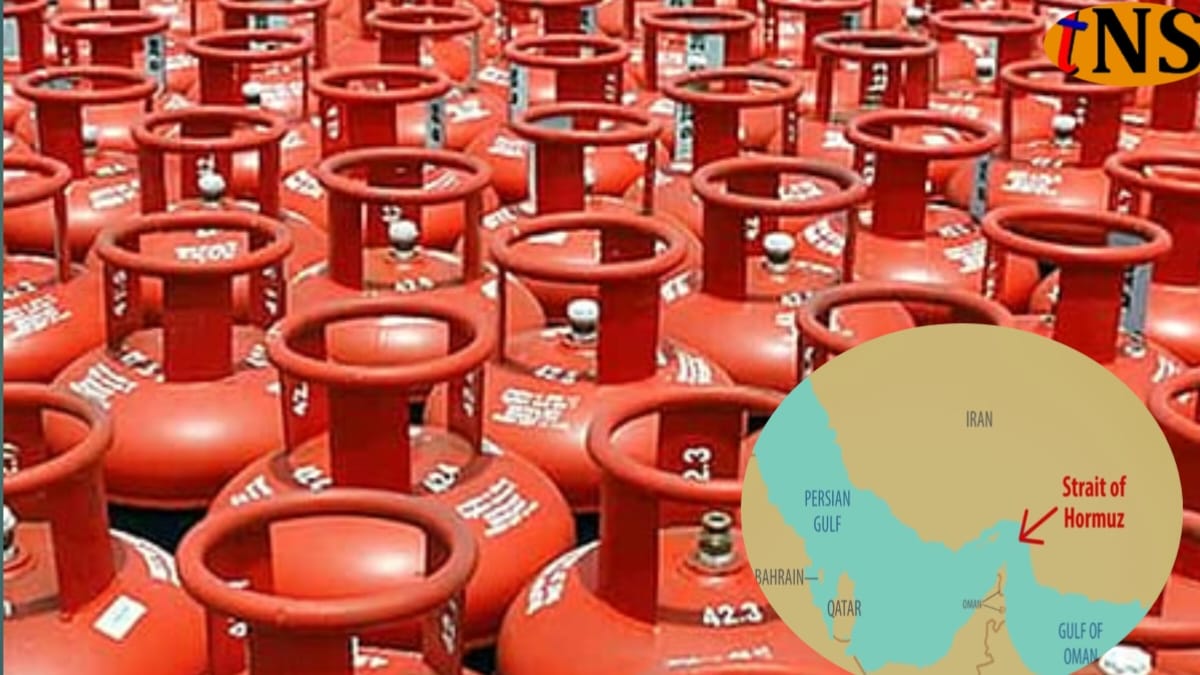
News Desk: The tense geopolitical situation in the Middle East has finally reached Indian kitchens. The dark clouds of conflict involving Iran, Israel, and the United States have already impacted the global market, and as a result, the price of cooking gas has increased in India. Although the central government has not made any official announcement regarding this, new prices for both domestic and commercial cylinders have come into effect from Saturday (Cooking Gas Price Hike).
Sharp Increase in Cylinder Prices
According to available information, the price of the 14.2 kg domestic LPG cylinder has been increased by Rs. 60 across the country. At the same time, the price of the 19 kg commercial cylinder used by businesses has risen by Rs.115.
The revised prices in four major metropolitan cities of the country are as follows:
- Domestic Cylinder (14.2 kg):
- Delhi: Rs.913 (Earlier Rs.853)
- Mumbai: Rs.912.50 (Earlier Rs.852.50)
- Kolkata: Rs.939 (Earlier Rs.879)
- Chennai: Rs.928.50 (Earlier Rs.868.50)
- Commercial Cylinder (19 kg):
- Delhi: Rs.1883 (Earlier Rs.1768.50)
- Mumbai: Rs.1835 (Earlier Rs.1720.50)
- Kolkata: Rs.1990 (Earlier Rs.1875.50)
- Chennai: Rs.2043.50 (Earlier Rs.1929)
Rumours of Shortage and Government’s Position
Amid nationwide reactions to the price hike, rumours have been circulating on social media about a possible fuel shortage. However, Union Petroleum and Natural Gas Minister Hardeep Singh Puri has strongly denied these concerns. In a post on social media platform X, he clarified that there is no shortage of energy in the country.
“Our top priority is to ensure affordable fuel supply for citizens. We are doing this effectively. There is no shortage of energy in India and consumers have no reason to worry.”
Similarly, the Indian Oil Corporation (IOC) has also reassured consumers. According to the company, the country has adequate fuel reserves and the supply system remains normal. The corporation has urged the public not to panic or crowd petrol pumps and to rely only on official information.
How the ‘Strait of Hormuz’ Crisis Is Affecting the Situation
The centre of the current military tensions in the Middle East is the Strait of Hormuz, a highly strategic maritime route located between Iran on one side and Oman and the United Arab Emirates on the other. This narrow passage connects the Persian Gulf with the Gulf of Oman.
Nearly 20 percent of the world’s crude oil trade passes through this route. Oil tankers from countries like Saudi Arabia, Iraq, and Kuwait transport crude oil to various parts of the world through this corridor. In the context of the ongoing conflict, Iran has reportedly obstructed ship movement in this route. As a result, fears of global fuel supply disruption have pushed up the prices of crude oil and cooking gas in the international market.
The direct impact of this surge is now being felt by Indian consumers.
On Friday, government sources acknowledged that although there may be disruptions in the Strait of Hormuz, India currently has sufficient reserves of crude oil and gas to handle any emergency situation.
UPSC Civil Services Examination 2025 Results Declared: Three Candidates from Assam Secure Ranks