Sailen Saikia:
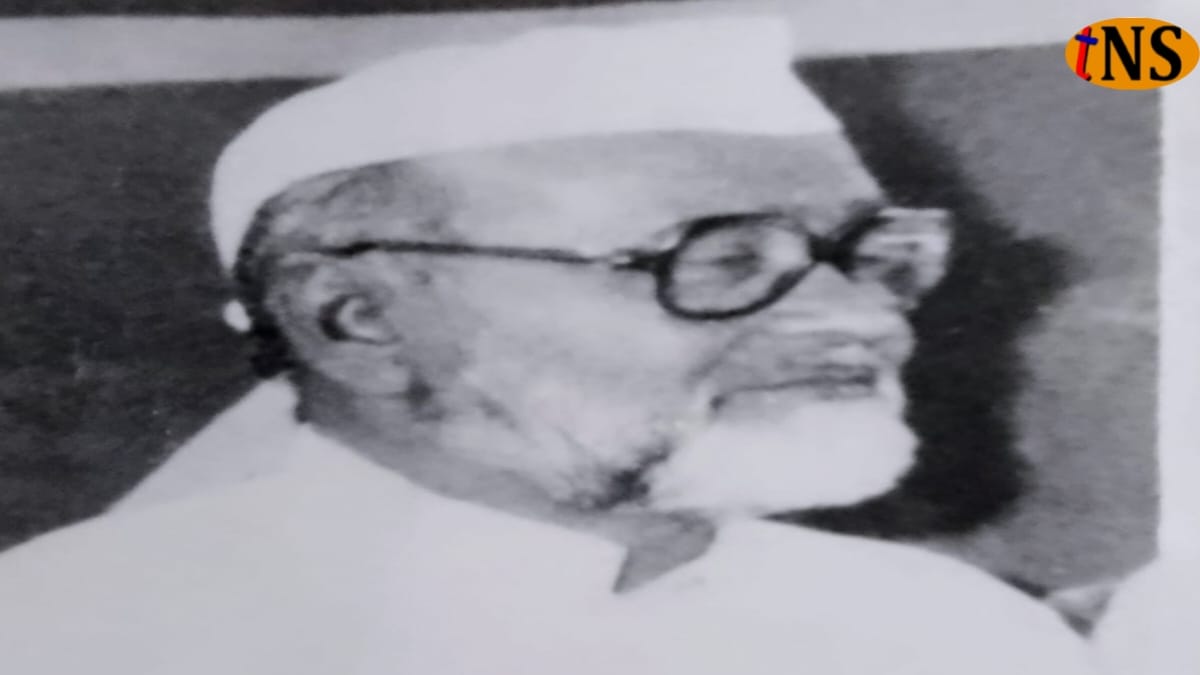
Mohammad Idris, the first legislator from the Rupohihat constituency of Nagaon, occupies a distinctive place in Assam’s political history. Over the course of a long public life, he represented not only Rupohihat but also the Dhing Legislative Assembly constituency. A four-time cabinet minister, Idris left behind a political legacy marked by administrative responsibility, organizational leadership, and a reputation for personal simplicity (Mohammad Idris Rupohihat First MLA).
A Leader Known for Integrity and Simplicity
In an era when political power often brought prestige and privilege, Mohammad Idris stood apart for his modesty. Despite reaching the higher ranks of government and handling important departments, he never allowed power to shape his personal life.
Those who knew him remember a politician who remained grounded, someone who chose not to indulge in luxury even while holding key ministerial responsibilities. Throughout his career, he worked across religious and social boundaries and remained committed to the welfare of economically weaker sections of society.
His political journey began soon after India’s independence. In the first general election held in 1952, Idris contested from the Rupohihat Assembly constituency in Nagaon district and was elected as a Member of the Assam Legislative Assembly. With the popularity he earned among ordinary people, he was elected six times to the Assam Legislative Assembly from two backward constituencies of Nagaon.
Early Life and Education
Mohammad Idris was born in 1920 in Uttar Khatowal village of the Saidoriya Mouza in Nagaon district. His father was Haji Amir Uddin.
He began his early education at Bogoriguri Junior Madrassa. Later, in 1940, he passed the matriculation examination from Nagaon Government High School. Idris then moved to Calcutta, where he completed his Intermediate of Science (ISC) from Bangabasi College.
Returning to Assam, he enrolled at Cotton College and graduated with a Bachelor of Arts degree. His academic journey continued further at Aligarh Muslim University. In 1946, he earned a Master’s degree in Economics, securing first class first position. He also obtained a Bachelor of Law (LLB) degree in the first class.
After completing his studies, Idris returned home and briefly worked as a teacher at the Alitangani Assamese-medium Ousmania High School in Nagaon. In 1948, he joined the Nagaon Bar Association and began practicing law.
Entry into Politics
While studying in Calcutta, Idris had already participated in India’s freedom movement. However, his formal political career began in 1949 when he joined the Indian National Congress. Soon afterwards, he became the General Secretary of the Nagaon District Congress Committee.
In the 1952 elections, contesting as a candidate of the Indian National Congress, he won the Rupohihat Assembly seat by a large margin. His political career thereafter continued for several decades.
Political Journey
Mohammad Idris was elected to the Assam Legislative Assembly multiple times from different constituencies.
1952: Elected MLA from Rupohihat.
1957: Re-elected from Rupohihat unopposed.
1962: Elected from the Dhing constituency.
1967: Defeated in the election.
1972: Elected again from Rupohihat.
1978: Re-elected from Rupohihat.
1983: Elected once more from Rupohihat.
However, in the 1985 mid-term elections, amid the political wave created by the newly formed Asom Gana Parishad and the United Minority Front, he was defeated in Rupohihat.
Role as a Cabinet Minister
During his tenure as an MLA, Mohammad Idris served in several Assam governments as a cabinet minister.
1972: In the ministry led by Chief Minister Sarat Chandra Sinha, he first handled departments such as Industries, Mines, and Excise. Later, he was entrusted with important portfolios including Public Works, Finance, and Power.
1980: In the cabinet of Chief Minister Anwara Taimur, he served as Minister in charge of Revenue and Cooperation.
1982: Under Chief Minister Keshab Gogoi, he was given charge of Finance, Planning, Development, and Animal Husbandry.
1983: In the ministry led by Chief Minister Hiteswar Saikia, he held portfolios including Finance, Planning, Mines, and Development.
Organizational and Public Roles
Apart from electoral politics, Idris also played significant roles in several organizations and institutions.
1962: Chairman of the Managing Committee of the Barua Bamun Gaon Sugar Mill in Dergaon.
1963: President of the Nagaon District Congress Committee.
1967–68: President of the Nagaon Sub-Divisional Council.
1971: Chairman of the Indian Jute Corporation.
1972: President of the Assam Pradesh Congress Committee.
1982–83: Chairman of the Assam Industrial Development Corporation.
During 1965–66, he also provided impartial and neutral leadership in the movement against Pakistani nationals, alongside leaders such as Fakhruddin Ali Ahmed, Moinul Haque Choudhury, and Maulana Ahmed Ali.
Personal Life and Character
Mohammad Idris was widely regarded as a principled and thoughtful political figure. Persuading people through flattery for political gain was something he never practiced. Even while serving as the minister of powerful departments such as Finance and Public Works, he lived in a small thatched house in Christianpatty in Nagaon town.
His personal financial situation often remained modest. In fact, during his tenure as a minister, he had to conduct his son’s marriage without elaborate arrangements due to financial constraints.
Despite these limitations, Idris continued to serve the public. During his years as an MLA, he contributed to the development of roads, bridges, educational institutions, and other infrastructure in the Rupohihat region. He was closely associated with the establishment and management of institutions such as Nagaon College, Rupahi College, and ADP College.
He was also connected with Jamiat Ulema-e-Hind, serving as the state vice-president of the organization and as a member of its All-India executive body.
Passing Away
Mohammad Idris, remembered as a dedicated public servant and a respected political leader, breathed his last on 8 February 1989. His life remains part of the political history of Nagaon and Assam, reflecting a career shaped by public service, organizational leadership, and personal simplicity.
From razing illegal houses to shower of flower: Buldozers are seeing role reversal in Asaam